5 Ways Food Labeling Can Make Restaurant Prep More Efficient
Prep is where a restaurant either sets itself up for a smooth service or quietly plants the seeds for problems that show up later in the shift. A misidentified container, an unlabeled batch of sauce, an ingredient that nobody can confirm is still in date — none of these feel like major issues in isolation, but they slow things down, create uncertainty, and force decisions that shouldn’t need to be made mid-service.
Food labeling is one of the simplest ways to eliminate that friction. According to the Food and Drugs Administration, proper food labeling and dating practices are among the most effective tools for reducing food waste, improving safety, and keeping kitchen operations predictable. Here’s how it actually plays out in practice
1. It Removes Guesswork From the Walk-In
A disorganized walk-in cooler is one of the most common sources of wasted time in a kitchen. Staff open the door, scan the shelves, and spend longer than they should figuring out what’s what, what’s fresh, and what needs to be used first. When containers aren’t labeled or are labeled inconsistently, that uncertainty compounds across every shift and every team member.
Clear prep and use-by date labels on every container turn the walk-in from a question mark into a system. Staff can see at a glance what was prepped when, what needs to go first, and what’s approaching the end of its usable window. That clarity alone can noticeably cut the time spent on inventory decisions during prep.
2. It Makes FIFO Rotation Automatic
First-in, first-out is a standard kitchen principle, but it only works when the information needed to follow it is actually visible. Without clear date labels, FIFO becomes something that relies on memory and experience rather than a system anyone can follow regardless of their role or tenure.
When every prepped item is labeled with a consistent format, rotation stops being a judgment call. A newer team member can follow the same rotation logic as a veteran line cook because the information is right there on the container. In practice, this is one of the biggest efficiency gains restaurants see from consistent food labeling. Less time spent figuring out what to use next means more time spent actually prepping.
3. It Reduces the Cost of Mid-Service Disruptions
Nothing slows down a service like a gap in information. A cook who isn’t sure whether a sauce is still within date, or a prep cook who can’t identify which of two similar containers holds what, has to stop and find out. That pause might only last thirty seconds, but it breaks rhythm and it adds up across a full shift.
A restaurant food label printer that produces clear, standardized labels for every prepped item means those micro-disruptions largely disappear. The information is on the container. Nobody has to ask, and nobody has to guess. Kitchens that make this shift often describe it as one of those small changes that makes a bigger difference than expected because the disruptions it eliminates are so constant that they’ve just become background noise.
4. It Supports Consistent Portioning Across Shifts
Portion control is one of the harder things to maintain consistently in a busy kitchen, particularly when the team changes between lunch and dinner service or across different days of the week. When prep labels include portion information alongside dates and contents, they create a reference point that travels with the food through the whole prep and service cycle. With a food label printer, restaurants can ensure labels are consistent.
That consistency matters beyond food cost. When portions are clearly marked at the prep stage, line cooks spend less time measuring and second-guessing during service. The work gets done faster, more uniformly, and with less cognitive load on staff who are already managing a lot of simultaneous tasks.
5. It Makes Training New Staff Significantly Easier
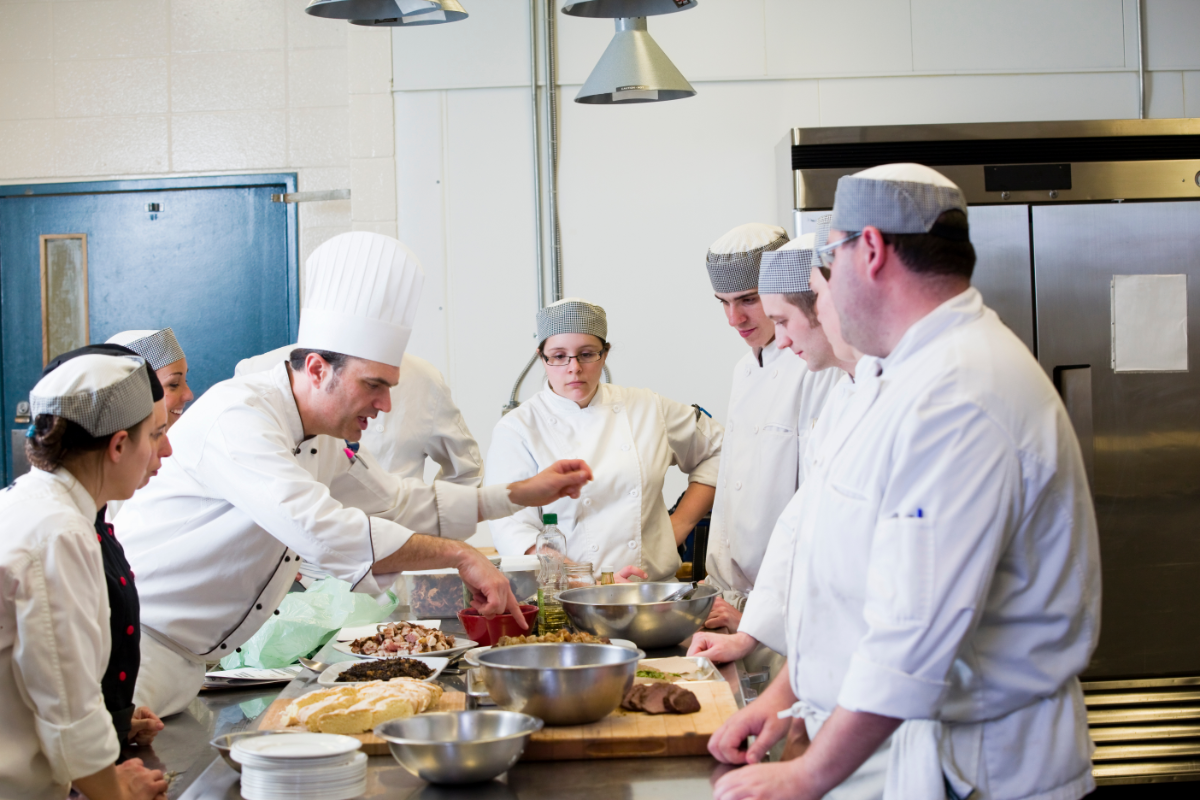
Onboarding in a restaurant kitchen is always a challenge. New staff need to absorb a lot of information quickly, and the learning curve can create real operational risk during the period before someone is fully up to speed. A well-labeled kitchen reduces that risk meaningfully.
When everything is clearly and consistently labeled, new team members can follow the system without needing to ask questions about every container they pick up. They can navigate the walk-in, follow rotation logic, and handle prep tasks with more confidence earlier in their tenure. Platforms like Label King Turbo, which integrate food label printing with broader kitchen operations tools including temperature monitoring and portion control, are designed around the idea that kitchen systems should be simple enough for any team member to follow from day one.
The Bottom Line
The restaurants that run the tightest operations aren’t necessarily the ones with the most sophisticated equipment or the largest teams. They’re often the ones that have nailed the basics so completely that nothing falls through the cracks during a busy shift.
Consistent food labeling is one of those basics. It costs very little to implement, it asks very little of your team once the habit is formed, and the compounding effect of getting it right every single day adds up to a kitchen that’s measurably easier to run. That’s a return worth taking seriously.